
The Psychology of Going Gray
And Why it’s More Empowering than you think
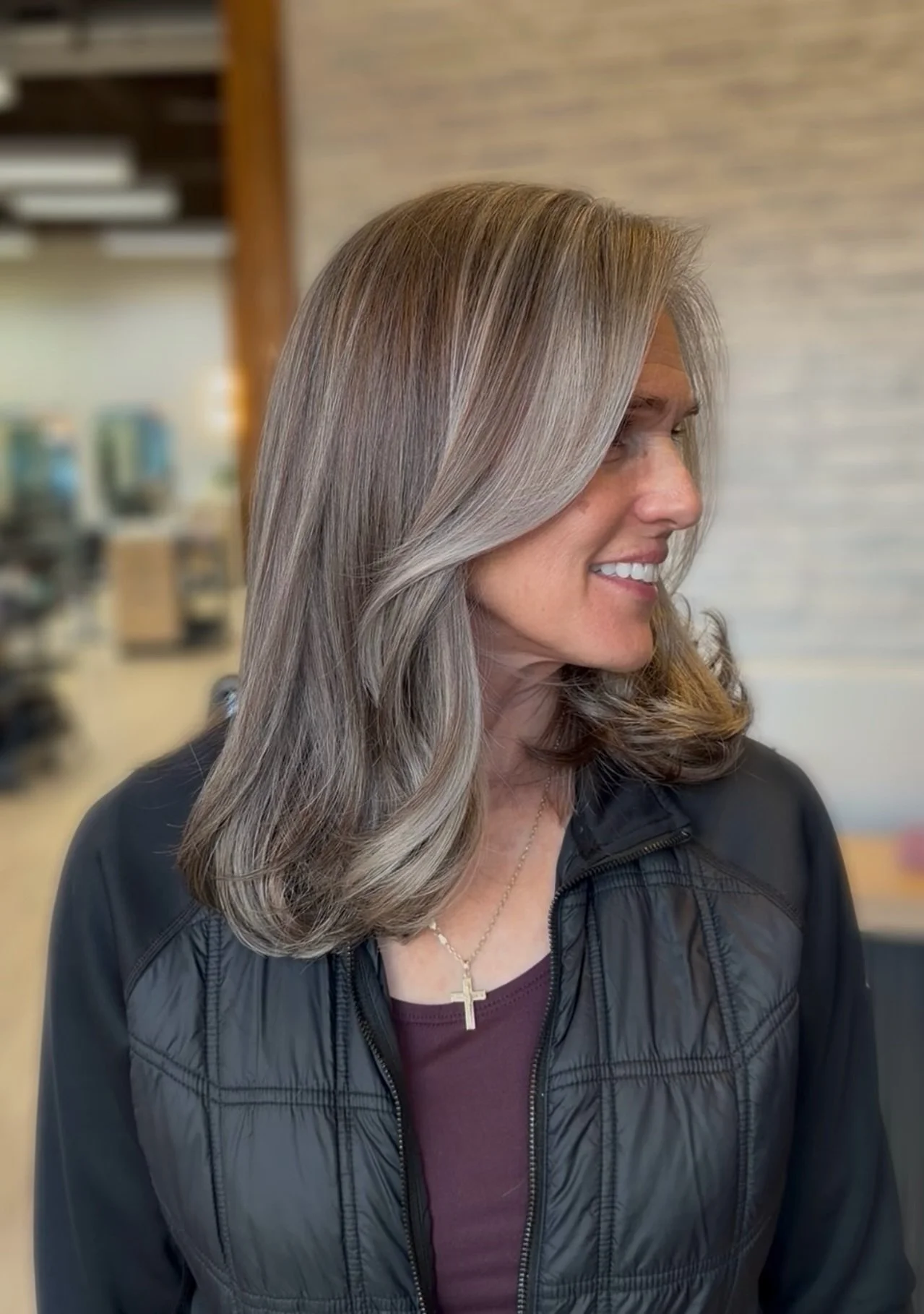
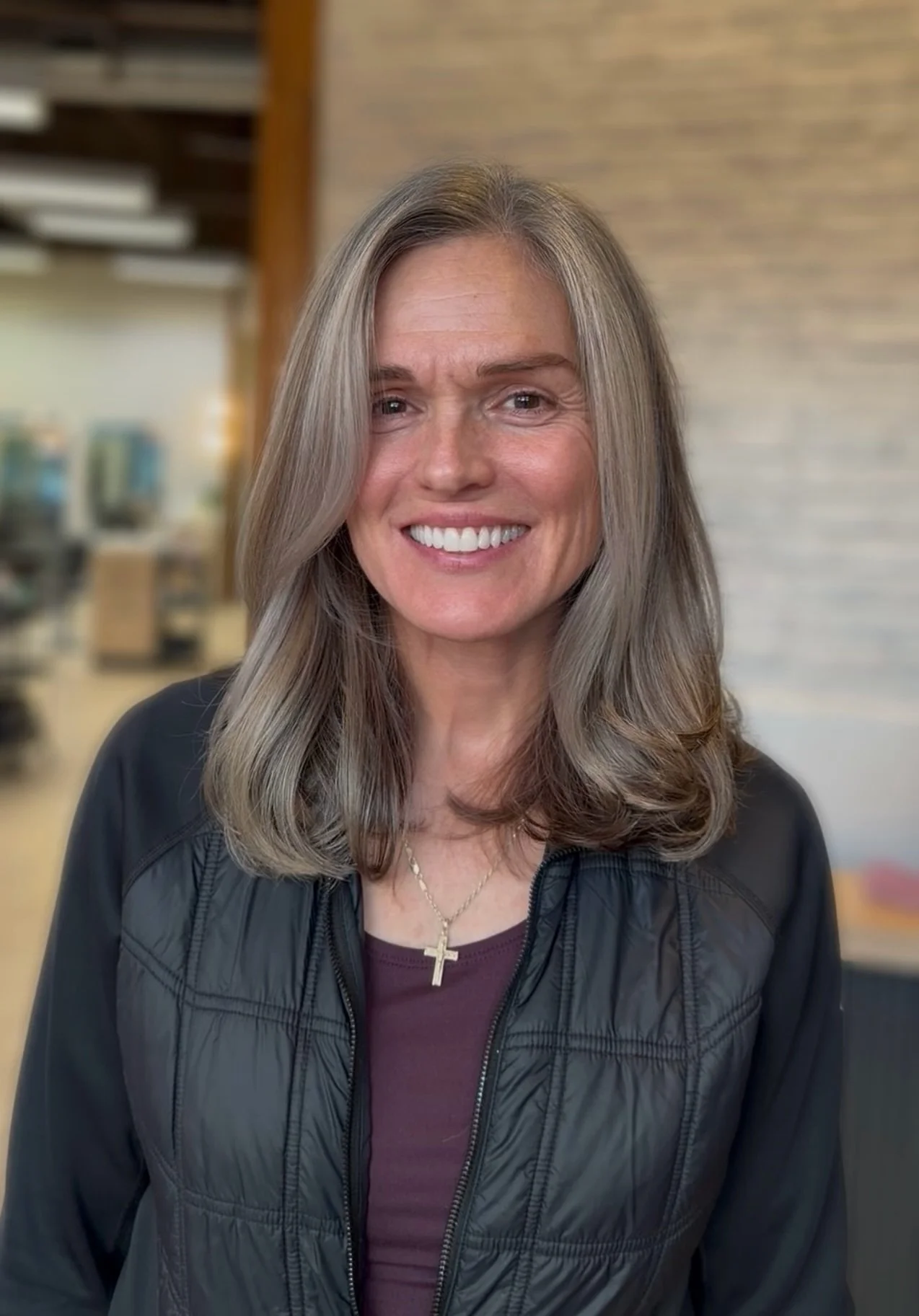

There’s something no one really talks about when it comes to going grey: it’s rarely just about the hair.
For most women, the decision to stop coloring carries a surprising amount of emotion. Because grey hair isn’t simply a color change — it’s tied to identity, aging, confidence, and how we see ourselves.
If you’ve been on the fence about it, what you’re feeling makes complete sense. Here’s what I’ve seen in the salon, and what I want you to know before you decide.
It Stirs Up Real Feelings — and that’s okay
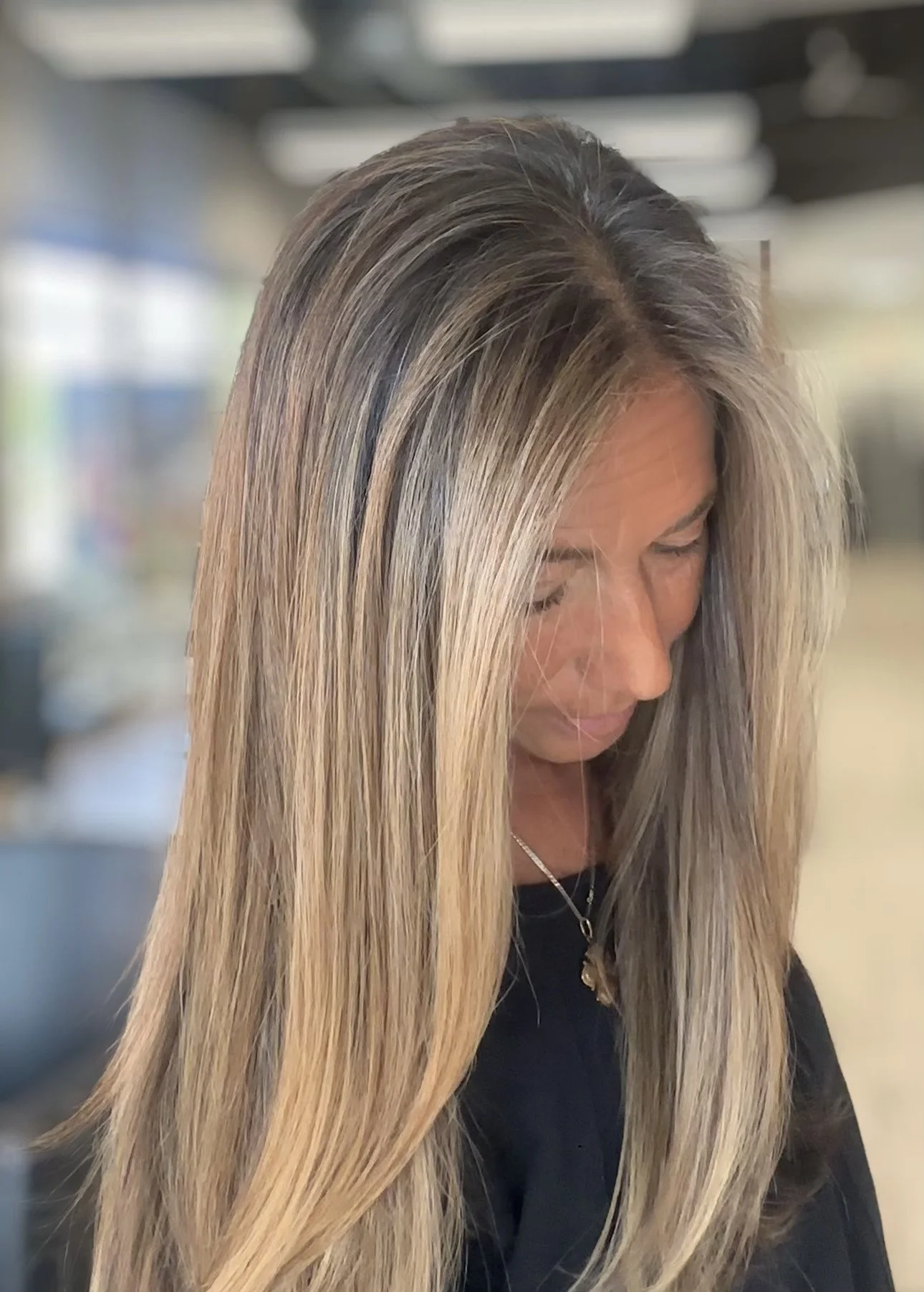
What I’ve noticed is that the clients who struggle most aren’t necessarily afraid of looking older — they’re the ones who feel like they have to choose between who they were and who they’re becoming. The good news? You don’t have to choose. A skilled grey blend is designed to honor both.
For some women, seeing grey feels confronting at first. Society has taught us for years that youth equals beauty, especially for women. Men are often called “distinguished” when they go grey, while women are expected to cover it up. That double standard is real — and it often shows up as an internalized voice that says grey hair will make you look tired, invisible, or past your prime.
But for others, choosing to transition can feel incredibly freeing. It can represent authenticity, confidence, wisdom, and finally letting go of the pressure to maintain an image that no longer feels aligned.
Honestly? Most women feel a little bit of both.
The Practical Upside is real too
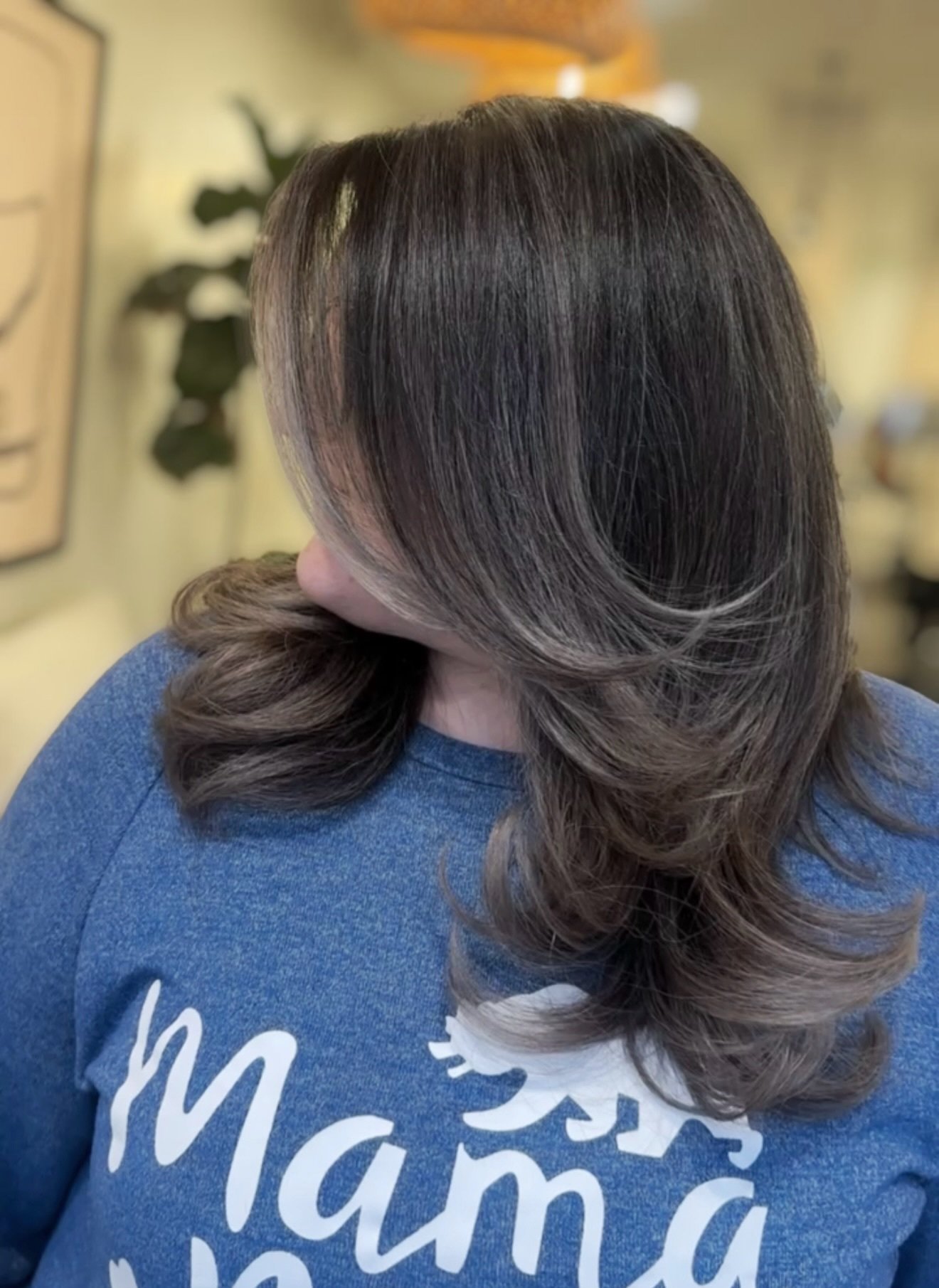
• The regrowth cycle becomes a thing of the past. Grey blending is designed to grow out gracefully, so your next appointment is on your schedule, not your roots’.
• Color damage decreases over time as you transition away from full coverage.
• Your budget shifts — fewer appointments, less product, more money staying in your pocket.
Many women are simply exhausted by the cycle — root touch-ups every 3–4 weeks, constant appointments, the cost, the time commitment, feeling permanently chained to a schedule. Grey blending can absolutely help with that:
For many of my clients, the low-maintenance reality was the thing that finally tipped them toward making the change. But emotionally, this process is usually much bigger than maintenance.
Fear Is Part of It — let’s name that too
There’s also fear. Fear of looking older. Fear of judgment from family, friends, or coworkers. Fear it won’t feel like you. Fear of not knowing what the process will actually look like.
That fear is worth naming because it’s normal — and it’s exactly why having the right stylist matters so much.
What Emotional Readiness actually looks like
In my experience, the women who are happiest with their grey journey are usually not just “giving up color.” They’re making a deeper decision: to simplify, to soften, to align how they look with how they actually feel.
That shift happens when it’s on your own terms — not because a partner mentioned it, not because you gave up, but because something clicked and you felt ready. If you’re not there yet, that’s fine. But if your color routine is starting to feel like something you’re doing for everyone else, that’s usually a sign worth paying attention to.
What a Great Stylist should offer you
A good gray transition isn’t about pushing someone toward a trend. It’s about creating a process that feels supportive, intentional, and personalized to the individual sitting in the chair.
My job isn’t to convince you to go gray. My job is to help you understand your options, preserve the integrity of your hair, and create a transition that still allows you to feel beautiful and like yourself the whole way through. When you sit down to talk about it, you should walk away with:
A clear picture of what your specific hair can do, cost and timeline
Honest input on which technique will give you the most natural result for your grey pattern
Product recommendations to keep your grey looking bright, not brassy or dull
Zero judgment about the pace you choose
Because the truth is, going grey isn’t about “letting yourself go.” For many women, it’s actually the opposite.
It’s choosing yourself in a new way.
Ready to explore what grey blending could look like for you?